

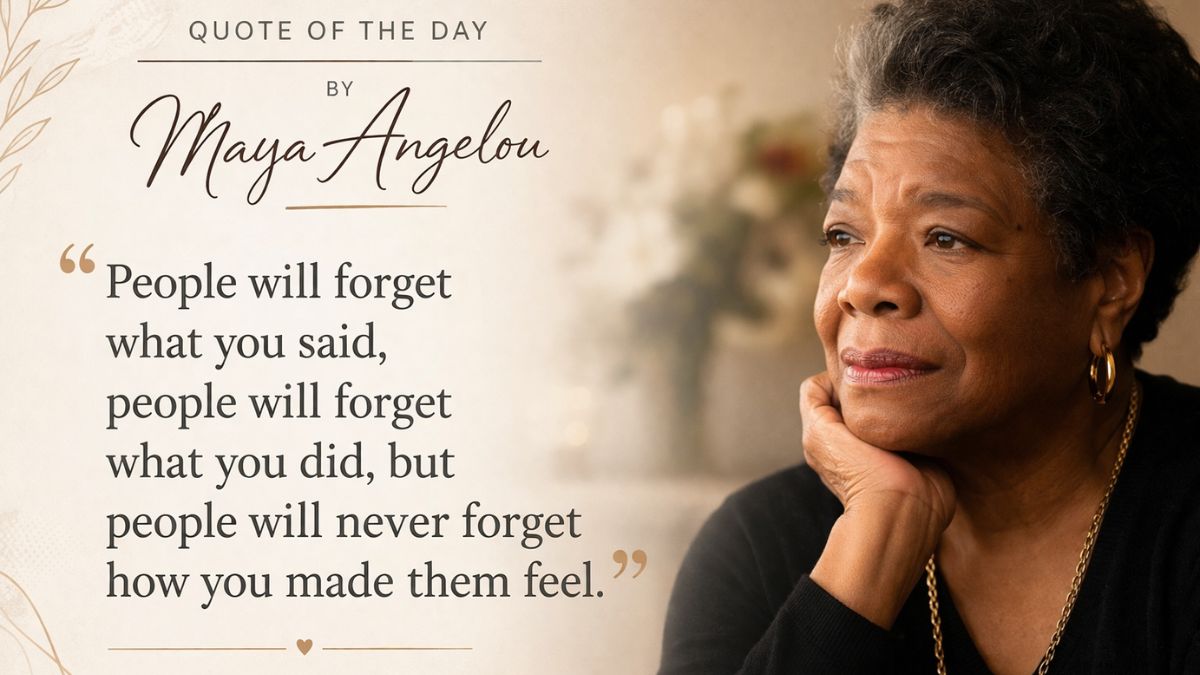
The timeless words of Maya Angelou continue to echo across generations: “People will forget what you said, people will forget what you did, but people will never forget how you made them feel.” At first glance, this quote seems simple, almost obvious. But the deeper you reflect on it, the more it reveals about human nature, relationships, and the invisible threads that connect us all.
In a world that often prioritizes achievements, accomplishments, and appearances, this quote gently reminds us that what truly matters is not what we say or even what we do—but how we make others feel. Feelings leave imprints that outlast moments, conversations, and even actions. They shape memories, influence decisions, and define how people remember us long after we are gone.
Why Words and Actions Fade Over Time
Human memory is fascinating but imperfect. We rarely remember exact conversations or specific details of events from years ago. Words blur, and actions lose their sharpness. What once seemed important can become distant and vague.
Think about a conversation you had a few years ago. You may not recall the exact words spoken, but you probably remember how that conversation made you feel. Whether it was comfort, joy, embarrassment, or pain, the emotional residue lingers long after the details disappear.
This happens because our brains are wired to prioritize emotional experiences. Emotions act as anchors for memory. When something makes us feel deeply—whether positively or negatively—it becomes more memorable. Words and actions are simply vehicles, but emotions are the destination.
The Emotional Imprint We Leave Behind
Every interaction we have with others leaves behind an emotional imprint. Sometimes, it is subtle—a smile that brightens someone’s day or a kind word that offers reassurance. Other times, it is profound—a gesture of support during a difficult time or an act of kindness when it is least expected.
These emotional imprints accumulate over time, shaping how people perceive us. You may not remember every teacher you had in school, but you likely remember the one who believed in you or the one who made you feel small. You may forget the details of a job, but you will remember how your workplace made you feel—valued or overlooked, inspired or drained.
This is the quiet power of emotional impact. It builds your legacy in ways that achievements alone cannot.
The Role of Emotional Intelligence
Understanding the importance of feelings requires emotional intelligence—the ability to recognize, understand, and manage emotions, both your own and those of others. Emotional intelligence is not about being overly sensitive; it is about being aware and intentional.
When you become more emotionally intelligent, you begin to notice how your words and actions affect others. You become more mindful of tone, body language, and timing. You learn that sometimes, what someone needs is not advice or solutions, but empathy and understanding.
Emotional intelligence allows you to create meaningful connections. It helps you move beyond surface-level interactions and build relationships that are rooted in trust and respect.
The Hidden Influence of Small Moments
One of the most powerful aspects of Maya Angelou’s quote is that it applies not just to big moments, but to everyday interactions. Often, it is the smallest gestures that leave the deepest impact.
A simple “thank you,” a genuine compliment, or even a moment of patience can make someone feel seen and valued. On the other hand, a careless remark or a dismissive attitude can linger in someone’s mind for years.
We often underestimate the influence we have on others. We assume that only grand gestures matter, but in reality, it is the accumulation of small moments that shapes how people feel about us.
Relationships Built on Feelings
At the core of every meaningful relationship lies emotion. Whether it is friendship, family, or love, relationships thrive on how people make each other feel. Respect, appreciation, kindness, and understanding are the foundations that hold relationships together.
When someone consistently makes you feel valued, safe, and understood, you naturally gravitate toward them. You trust them. You remember them. And you carry their presence with you, even when they are not around.
Conversely, when someone makes you feel ignored, criticized, or unimportant, those feelings create distance. Over time, they weaken the connection, regardless of how many words or actions are involved.
This is why emotional awareness is essential in relationships. It is not enough to say the right things or do the right things. What truly matters is how those words and actions are received.
The Lasting Impact of Kindness
Kindness is one of the simplest yet most powerful ways to create positive emotional impact. It does not require wealth, status, or special skills. It only requires intention.
When you choose kindness, you create moments that people remember. A kind gesture during someone’s difficult time can stay with them forever. It becomes a story they carry, a memory they cherish, and often, something they pass on to others.
Kindness has a ripple effect. When you make someone feel good, they are more likely to extend that feeling to others. In this way, your emotional impact goes far beyond the immediate moment. It spreads, creating a chain of positivity that you may never fully see.
How Negative Emotions Leave Deeper Marks
While positive feelings create lasting bonds, negative emotions can leave even deeper scars. Hurtful words, dismissive behavior, or lack of empathy can stay with someone for years, sometimes even shaping their self-worth.
This does not mean we must be perfect in every interaction. Mistakes are part of being human. However, it highlights the importance of awareness and accountability. When we realize that we have hurt someone, acknowledging it and making amends can help heal the emotional impact.
Understanding this aspect of human experience encourages us to be more thoughtful in our interactions. It reminds us that our words and actions carry weight, even when we do not intend them to.
Creating a Meaningful Personal Legacy
Many people think of legacy in terms of achievements, success, or recognition. But Maya Angelou’s words suggest a different perspective. Your true legacy is not what you accomplish, but how you make people feel along the way.
Years from now, people may not remember your job title, your possessions, or even your specific achievements. But they will remember how you treated them. They will remember whether you made them feel encouraged, respected, and valued.
This realization shifts our priorities. It encourages us to focus less on impressing others and more on connecting with them. It reminds us that the most meaningful impact we can have is emotional, not material.
Living with Intention and Awareness
If feelings are what people remember most, then living with intention becomes essential. Every interaction is an opportunity to create a positive impact.
This does not mean you must constantly please others or ignore your own needs. Instead, it means being mindful of how you show up in the world. It means choosing words that uplift rather than harm, actions that support rather than dismiss, and attitudes that foster connection rather than distance.
Living with intention also involves self-awareness. Understanding your own emotions helps you respond rather than react. It allows you to approach situations with clarity and compassion, rather than impulsiveness.
The Quiet Power of Making Someone Feel Seen
In today’s fast-paced world, many people feel overlooked or unheard. Taking a moment to truly listen to someone, to acknowledge their feelings, or to simply be present can have a profound impact.
Making someone feel seen is one of the most powerful things you can do. It tells them that they matter, that their experiences are valid, and that they are not alone.
This kind of emotional connection does not require grand gestures. It requires presence, attention, and sincerity. And yet, its impact can last a lifetime.
Conclusion: The Legacy of Emotion
Maya Angelou’s quote is not just a reflection on memory; it is a guide for living. It reminds us that while words and actions are important, they are not what define us in the hearts of others. What truly matters is the feeling we leave behind.
In every interaction, we have a choice. We can choose to create moments of kindness, understanding, and connection. We can choose to be mindful of the emotional impact we have on others.
Because in the end, it is not the words we speak or the actions we take that people will carry with them. It is the way we made them feel. And that feeling, whether gentle or powerful, becomes a part of their story—and ours.
FAQs
What is the main message of Maya Angelou’s quote?
The quote by Maya Angelou emphasizes that emotions leave a lasting impact, more than words or actions.
Why do people remember feelings more than words?
Because emotions create stronger and deeper memories in the brain, making them last longer than spoken words or actions.
How can we apply this quote in daily life?
By being kind, empathetic, and mindful of how our behavior affects others’ feelings in every interaction.






Leave a Reply