

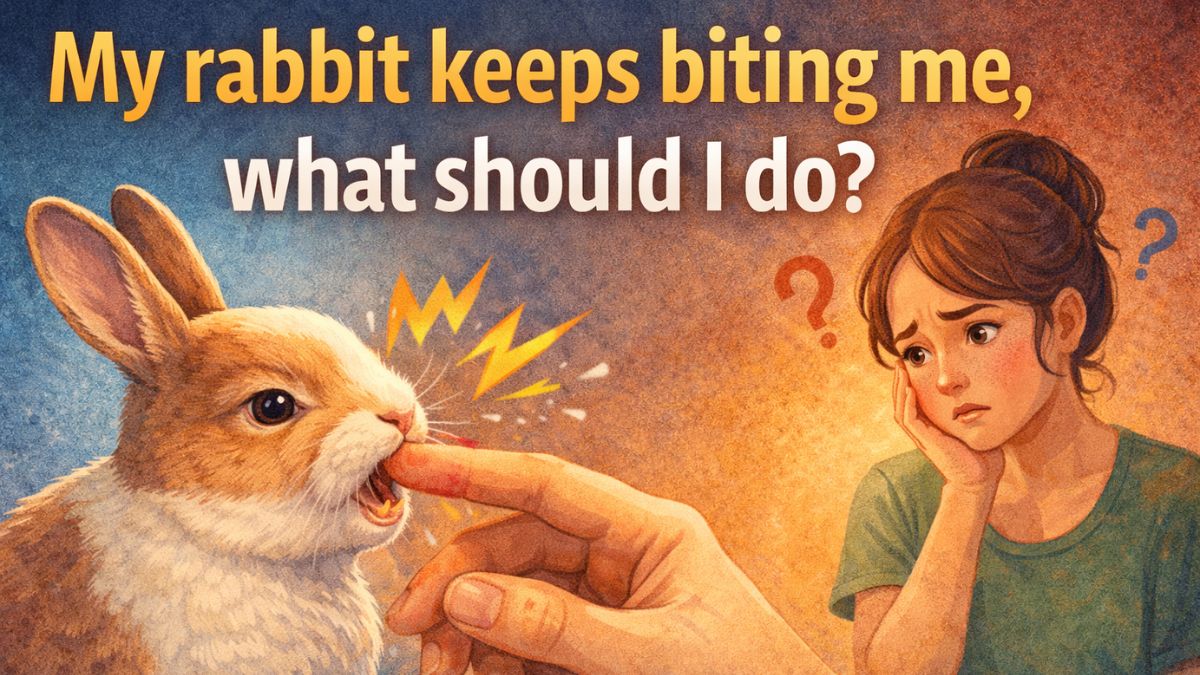
Having a pet rabbit can be one of the most rewarding experiences. They are soft, intelligent, and full of personality. However, many rabbit owners face a confusing and sometimes painful problem—biting behavior. If your rabbit keeps biting you, it can feel surprising, hurtful, and even a little discouraging.
The good news is that biting in rabbits is usually not “bad behavior” in the way people think. In most cases, it is a form of communication. Your rabbit is trying to tell you something—fear, discomfort, territory issues, or even hormonal changes. Understanding the reason behind the behavior is the first step toward fixing it and building a stronger bond with your pet.
Understanding Rabbit Behavior: Why Biting Happens
Before solving the problem, it is important to understand how rabbits think. A rabbit is a prey animal in the wild, which means it is naturally alert, cautious, and sensitive to its surroundings. Even domesticated rabbits still carry these instincts.
When a rabbit bites, it is not always aggression. Sometimes it is fear. Sometimes it is frustration. And sometimes it is simply a way of setting boundaries. Unlike dogs or cats, rabbits do not rely heavily on vocal communication, so they use body language and gentle (or not-so-gentle) bites to express themselves.
To address the issue properly, you must observe when and how the biting happens. This behavior pattern often reveals the root cause.
Fear and Lack of Trust: The Most Common Reason
One of the biggest reasons a rabbit bites is fear. If a rabbit does not fully trust its owner yet, it may react defensively when approached or handled. Sudden movements, loud noises, or unfamiliar environments can make the rabbit feel unsafe.
In such cases, biting is not meant to hurt you—it is a reflex to protect itself. Even if your intentions are good, the rabbit may interpret your actions differently.
Building trust takes time and patience. Spending quiet time near your rabbit, allowing it to approach you first, and avoiding forced handling can gradually reduce fear-based biting. Over time, the rabbit begins to understand that you are not a threat.
Territorial Behavior: Protecting Their Space
Rabbits are highly territorial animals. They often consider their cage, litter box, or favorite corner as their personal space. If you suddenly reach into their area, they may bite as a warning.
This type of behavior is especially common in rabbits that have not been properly trained to accept human interaction in their space. It can also happen when you try to clean their cage or remove them without warning.
A rabbit may see your hand as an intrusion rather than affection. That is why it is important to always approach slowly and let your rabbit know you are coming. Speaking softly before entering their space can help reduce sudden reactions.
Hormonal Changes and Maturity
If your rabbit is not spayed or neutered, hormones may play a major role in biting behavior. As rabbits reach maturity, they can become more protective, aggressive, or unpredictable.
Male rabbits may bite to assert dominance, while female rabbits may become more territorial, especially during nesting instincts. This behavior often appears suddenly and may confuse owners who previously had a calm pet.
In many cases, spaying or neutering significantly reduces aggressive behavior. It helps balance hormones and makes the rabbit calmer and more social over time.
Pain or Health Issues: An Often Overlooked Cause
Sometimes biting is not behavioral at all—it is physical. If a rabbit is in pain or discomfort, it may react by biting when touched. Dental problems, injuries, or internal health issues can make your pet more sensitive.
Rabbits are very good at hiding pain, so biting may be one of the only signs that something is wrong. If your rabbit suddenly starts biting when it was previously calm, a veterinary check-up is strongly recommended.
Pay attention to other signs such as reduced appetite, less movement, or changes in droppings. These symptoms, along with biting, may indicate an underlying health issue.
Overstimulation and Handling Mistakes
Rabbits are sensitive creatures and do not always enjoy being held or petted for long periods. While some rabbits tolerate cuddling, others prefer minimal physical contact.
If you continue petting a rabbit after it becomes uncomfortable, it may bite to signal “enough.” This is often misunderstood as sudden aggression, but in reality, it is a warning.
Learning your rabbit’s comfort level is essential. Some rabbits enjoy gentle strokes on their head, while others prefer sitting beside you rather than being touched. Respecting these preferences strengthens trust and reduces biting incidents.
How to Respond When Your Rabbit Bites
When a rabbit bites you, your reaction matters a lot. Shouting or punishing the rabbit can increase fear and make the behavior worse. Rabbits do not understand punishment in the way humans do.
Instead, it is better to remain calm. Gently moving away and giving the rabbit space helps it understand that biting does not lead to attention or interaction. Over time, this teaches boundaries without creating fear.
It is also important to observe the situation immediately before the bite. Were you touching a sensitive area? Were you in its space too quickly? These clues help you adjust your behavior.
Building Trust and Positive Bonding
Trust is the foundation of a healthy relationship with your rabbit. Spending time on the floor with your rabbit at its level can make a big difference. Allow it to come to you instead of chasing it or picking it up frequently.
Offering treats by hand can also help create positive associations. However, this should be done gently and without forcing interaction. Over time, your rabbit will begin to see you as a source of comfort rather than fear.
Consistency is key. The more predictable and calm your behavior is, the more secure your rabbit will feel around you.
Training Your Rabbit to Reduce Biting
Although rabbits are not trained in the same way as dogs, they can still learn behaviors through repetition and reinforcement. When your rabbit behaves calmly around you, reward it with gentle praise or treats.
If biting occurs, calmly withdraw attention for a short period. This teaches the rabbit that calm behavior leads to interaction, while biting leads to isolation.
Over time, this consistent response helps reshape behavior without fear or punishment.
When to Seek Professional Help
If biting continues despite your efforts, it may be helpful to consult a veterinarian or a rabbit behavior specialist. Sometimes the issue is deeper than simple training, especially if it is linked to health or severe stress.
Professional guidance can help identify hidden triggers and provide a more structured approach to behavior correction. This is especially important for first-time rabbit owners who may not yet fully understand rabbit psychology.
Conclusion: Patience Builds a Better Bond
If your rabbit keeps biting you, it does not mean your pet is aggressive or unloving. In most cases, it is simply trying to communicate discomfort, fear, or boundaries. Understanding this is the first step toward improving your relationship.
With patience, observation, and gentle handling, biting behavior can be reduced and often completely resolved. Every rabbit is different, and building trust takes time, but the bond you develop is worth the effort.
In the end, a calm, secure rabbit is a happy companion—and with the right approach, your pet can learn to trust you fully and feel safe in your presence.
FAQs
Why does my rabbit bite me suddenly?
Your rabbit may bite due to fear, territorial behavior, overstimulation, or discomfort.
How can I stop my rabbit from biting?
Build trust, avoid forcing interaction, handle gently, and reward calm behavior consistently.
Do I need a vet if my rabbit keeps biting?
Yes, if biting is sudden or unusual, it may indicate pain or health issues and needs a vet check.















Leave a Reply